


Intelligent Data-Driven Wheel–Rail Interface Optimization for Reduced Wear and Noise
Minimize abrasion and noise to extend the service life of infrastructure and increase ride comfort.
A suboptimal wheel-rail interface can lead to discomfort for passengers, damage to infrastructure, and higher maintenance costs. With increasing utilization, heterogeneity on the rails, and high cost pressure, optimization potential is becoming increasingly valuable.
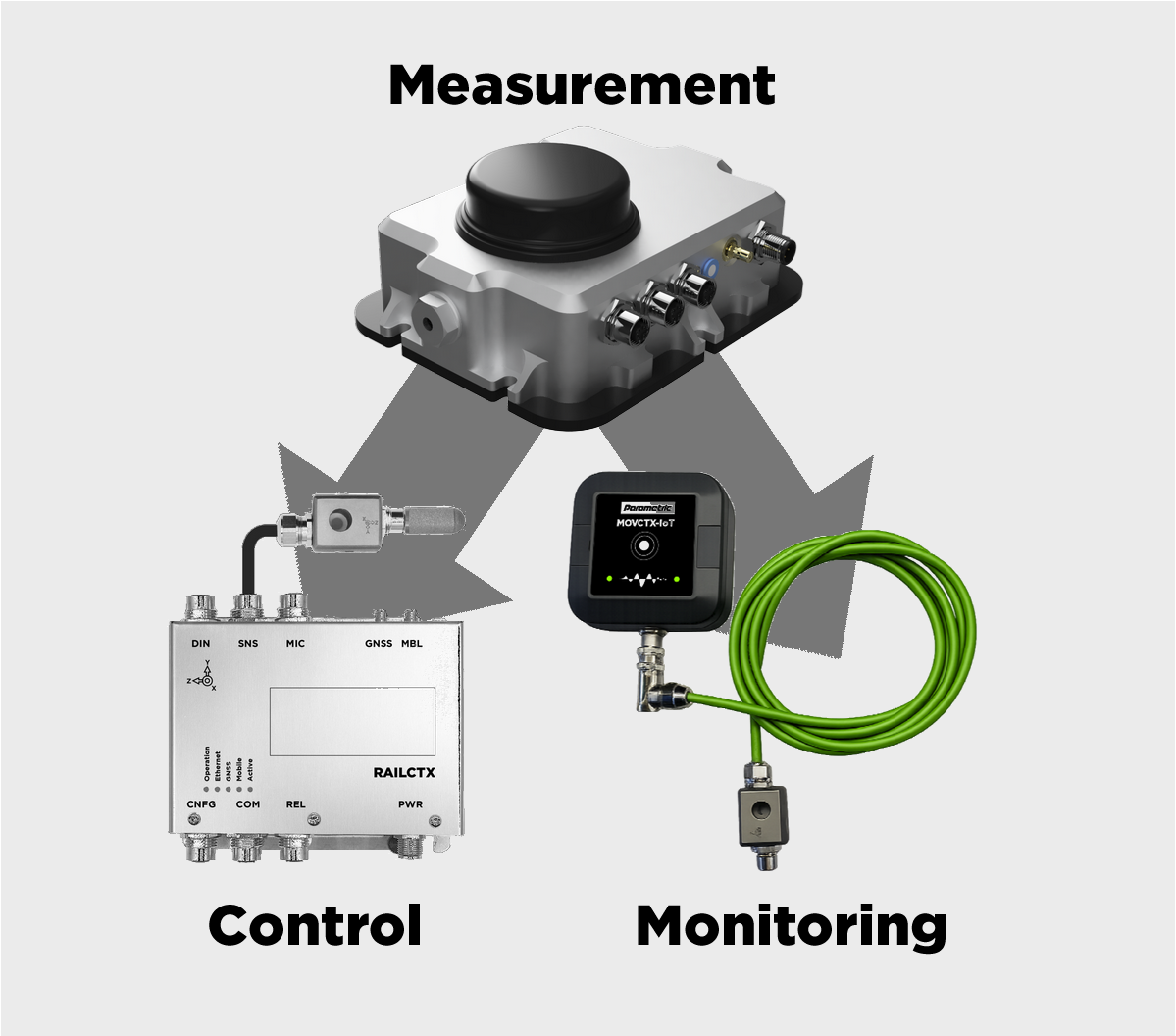
Parametric's measurement and control systems offer a solution by using high-resolution measurements and real-time control.
How it works:
- Intelligent analysis of vibrations, noises, and mechanical shocks detects anomalies
- Edge-based processing ensures immediate detection and response (e.g., rail lubrication via a pump installed on the vehicle)
Main advantages:
- Extends the service life of infrastructure by reducing stress on the rails
- Improves the passenger experience with smoother and more comfortable journeys
- Reduces long-term maintenance costs for rail operators

The Cause of Vibrations and Noise in Rail Transport
Vibrations and noise in rail transport are mainly caused by the dynamic interaction between train wheels and rails. The most important influencing factors include:
- Irregularities on wheel or rail surfaces can lead to uneven contact, causing vibrations and noise. This can be caused by wear, defects, or misalignment.
Conclusion: Understanding the causes of vibration and noise in rail transport is crucial for a smooth, safe, and efficient rail system. Factors such as wheel-rail interaction, track irregularities, train speed, and structural resonance contribute to these challenges. If excessive vibrations are not addressed, they can lead to increased wear, structural damage, reduced ride comfort, and rising maintenance costs. Therefore, continuous monitoring and optimization of wheel-rail dynamics are essential to minimize vibrations and improve the overall performance of rail transport.