
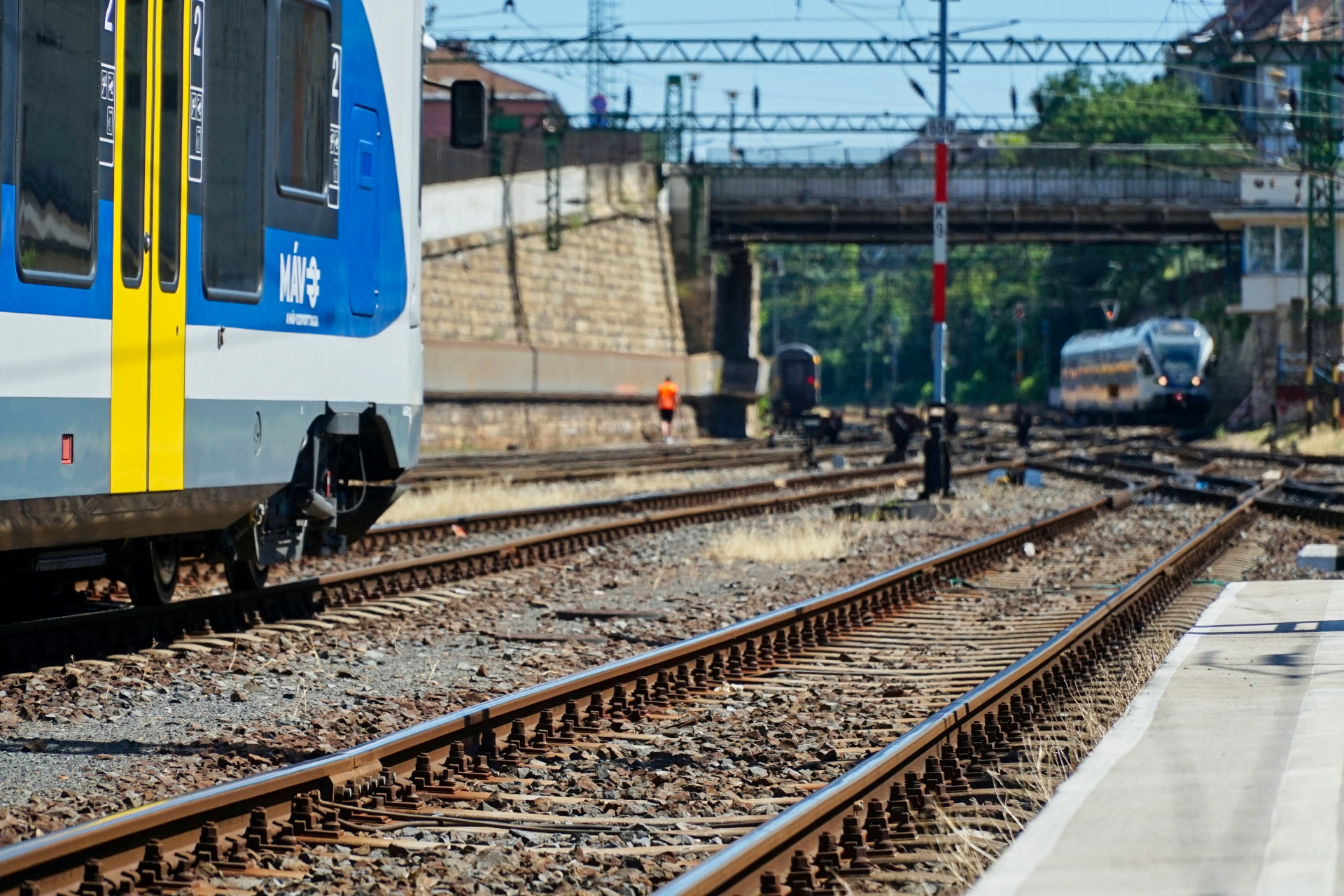
Rail networks are coming under increasing pressure. Climate change is leading to more frequent heatwaves, stronger temperature fluctuations, heavy rainfall events and highly localised microclimate effects. At the same time, many networks are becoming more heavily utilised due to denser timetables, higher train frequencies and the growing shift of traffic to rail.
This combination increases stress at the critical interface between wheel and rail. Thermally stressed tracks, switches, bridges, curves and transition zones become more sensitive to dynamic forces. As a result, local hotspots can emerge — including in locations that have not previously appeared as critical in historical maintenance or incident data.
Conventional monitoring methods have limitations in this context. Measurement trains provide valuable information, but they operate periodically and capture the condition of the infrastructure only at a specific point in time. Stationary trackside systems monitor individual locations, but they do not provide a continuous picture of dynamic stress along the network. Many climate- and utilisation-related anomalies occur only under specific conditions: during heat, after prolonged solar exposure, under dense train sequences, or with certain vehicle types, speeds or directions of travel.
Parametric closes this monitoring gap with decentralised wheel–rail monitoring under real operating conditions. Retrofittable measurement nodes capture local climate, environmental and dynamic data directly at the point of stress. Depending on the application, this includes temperature, humidity, surface heat, solar radiation, vibration, shocks, acceleration, position, speed and other operational data.
A Parametric measurement node is more than a sensor. It combines sensing, edge analytics, local alerting and communication in a compact unit. Data is validated, assessed and checked for thresholds, trends and anomalies directly on site. Critical events can be detected locally, stored and transmitted to control centres, maintenance systems or analytics platforms.
This creates a dynamic condition and hotspot map of the rail network. Operators can identify which track sections, switches, bridges or transition zones react abnormally under heat, humidity, temperature fluctuations or high traffic load. Inspections can be planned more precisely, maintenance measures can be prioritised and operational decisions can be supported with real condition data.
This early detection capability is particularly important as network utilisation increases. Small local issues can quickly lead to delay chains, capacity losses and operational instability. Parametric helps make these risks visible at an early stage — locally, continuously and under real operating conditions.
Parametric detects dynamic stress where measurement trains provide only snapshots and trackside systems see only individual points: directly in operation, at the critical point in the rail network.